








3 IRA Strategies to Boost Your Retirement Savings
When it comes to retirement planning, employer 401(k) programs tend to be the option people think of. But there are other ways you can save money for...
2 min read

 Retirement brings many changes to your life, big and small. You may not have to answer to an alarm clock, boss, or coworkers, and deciding how you spend your time is up to you. But one thing that will never change is your abidance to taxes. Taxes are a constant, no matter if you are in the workforce or retired from it. Here is a closer look at how taxes change after you retire. Michelle P. Scott of Investopedia.com points to a few important factors influencing your tax liability during retirement, specifically: Your filing status, income sources during retirement, and total annual income:
401(k) and traditional IRA accounts
Perhaps your employer set you up with a 401(k) prior to retirement or you established one on your own. This type of account is subject to taxes in retirement — as is a traditional IRA. “These are long-term assets, but withdrawals aren’t taxed as long-term capital gains. IRA withdrawals, as well as withdrawals from 401(k) plans, 403(b) plans, and 457 plans, are reported on your tax return as ordinary income,” adds Anspach.
If you are paying into a Roth IRA, you’ll find that both distributions and withdrawals don’t carry the taxing burden. “Contributions you make to a Roth IRA account are made with after-tax dollars, and you don’t have the option of deducting these contributions from your income. This makes withdrawals from a Roth IRA during retirement totally tax-free,” reports a TurboTax expert.
Although you will pay taxes on any pretax monies you change over, notes TurboTax, it might be worth investigating the tax benefits of changing your traditional IRA or other 401(k) plan into a Roth IRA. Your tax liabilities in the future can be reduced, adds the TurboTax expert. This move may add more financial freedom to your retirement.
Social Security
Your Social Security benefits may look a bit different in retirement, since a high percentage of your money may be taxable depending on your financial circumstances. “Depending on your ‘provisional income,’ up to 85% of your Social Security benefits are subject to federal income taxes. To determine your provisional income, take your modified adjusted gross income, add half of your Social Security benefits and add all of your tax-exempt interest,” advise the editors at Kiplinger’s Personal Finance.
If your only source of income comes from Social Security, though, you might not have to pay any taxes as a retiree, according to Dana Anspach, writer for TheBalanceMoney.com. It is only when you have additional streams of income that taxation applies to your funds in retirement.
Tax benefits for retirees
In addition to understanding how your income in retirement is taxed, it’s also important to know what special tax breaks you earn as a retiree.
According to Rocky Mengle and Kevin McCormally, writers for Kiplinger.com, as a retiree you are qualified to take a bigger standard deduction on your tax return. And if your spouse is still employed, they can add money to your IRA account.
“As long as your spouse has enough earned income to fund the contribution to your account (and any deposits to his or her own), this tax shelter’s doors remain open to you,” they add.
Retirement ushers in a new life chapter complete with many changes. Take time to discover your tax payment responsibilities and what tax benefits are available to you.

When it comes to retirement planning, employer 401(k) programs tend to be the option people think of. But there are other ways you can save money for...
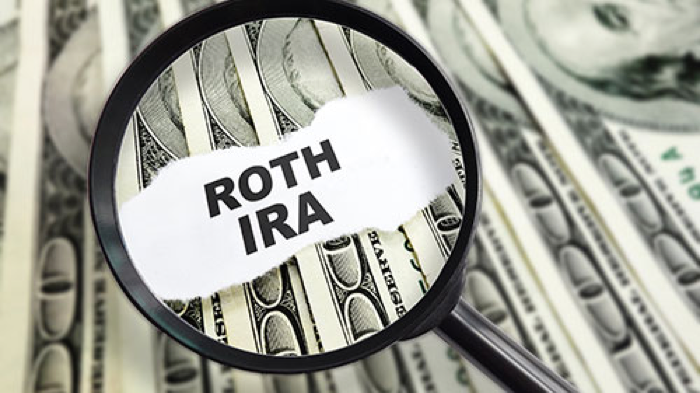
As you plan for retirement, it’s important to invest your money in a way that maximizes your income in your senior years. In some cases, a Roth IRA...

A 401(k) plan may be ideal when it comes to saving for retirement. Still, it’s possible to meet ambitious retirement goals even without one. If your...