

How to Recognize a Text Message Scam
Chances are, it has happened to you. A text alert on your phone shows you have received a suspicious message from a number you do not recognize. Your...
2 min read

 Wondering how much money you should have set aside by the time you turn 30? What about 40? Financial Planner Lindsey Shinners talks through key financial milestones, priorities, and pitfalls at each stage of life:
Is there a savings benchmark for age 30?
As with most financial planning questions, the broad answer is “it depends” — on factors like individual circumstances, lifestyle goals, and vision for retirement.
At age 30 it can be challenging to know what your end goal is. That said, benchmarks can be helpful for direction. Conventional wisdom tells us to aim to save one times your annual salary by 30. However, this is a guidepost. There’s no hard and fast rule that ‘if you do X by this age, you’ll be set.’ Instead, at this stage of life it can be more important to focus on building consistent habits over hitting a perfect number — establishing behaviors that are going to move you toward long-term goals.
How aggressive should an investment portfolio be at age 30?
At this age there’s a good likelihood that you have decades before retirement, so time can potentially be one of your greatest advantages and allow you to be flexible.
There’s no one-size-fits-all portfolio mix — it’s going to depend on your goals and priorities. Rather than thinking of your assets in terms of percentages, it can make sense to think of your money in buckets. For example — you might have different savings buckets or accounts for long- (10 plus years), mid- (five plus years), and short-term (up to five years) needs. If you decide you want to be more growth-oriented and aggressive, money earmarked for the long term may be where you have the most flexibility to do so, when short-term market fluctuations may be less of an issue. By the same token, it can make sense to be the most conservative with money you’ll need in the near term, like your emergency fund.
How to prioritize savings at age 30
It really comes down to what matters most and works best for you. Generally speaking, creating an emergency fund can be very important to help ensure you have a safety net for an unexpected expense. As a rule of thumb, six months of income can be a good target, for single-income households, and three months for dual-income households.
Additionally, at a minimum it makes sense to at least save enough in your workplace plan (if you have one) to qualify for any employer match. Otherwise, you may be leaving free money on the table. From there you can be flexible and build on a 401(k) or other retirement savings or maybe invest through a brokerage account. The key at 30 is to establish at least some savings buckets and continue moving forward.
For tips on pitfalls to avoid, how often to review your financial plan, and how much to save by 40, read the full article here.
Regardless of your current age, you can use these benchmarks to look at your current financial situation and determine how you are doing with your personal savings. Opening a savings account with First Federal Bank could be an important part of your strategy. Stop by one of our branches today to learn how we can help you with your savings goals.

Chances are, it has happened to you. A text alert on your phone shows you have received a suspicious message from a number you do not recognize. Your...

It’s common to think about how much money you need to save for your retirement. But that may be a long time from now, depending on your current age....
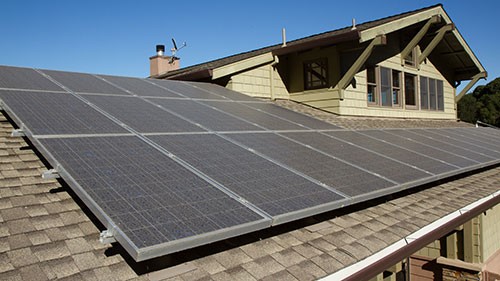
You want your home to be as comfortable, efficient and as beautiful as it can be. However, deciding which home improvement projects or upgrades to...