





2 min read
How Online Banking Can Help You Budget Better
With easy-to-access data, convenient automatic transfers, and a variety of ways to organize your money, online banking can revolutionize the way you...
1 min read

 Do you ever wonder how the balance of your savings account compares to others? The Federal Reserve tracks this data, and makes it publicly available. Let’s take a look at how much savings a typical American has by age, household type, and education…
According to the Fed’s Survey of Consumer Finances, the median amount held in bank accounts across all American households in 2022 (the most recent data available) was $8,000. This amount is in transaction accounts, which include checking, savings, money market, and brokerage cash accounts, as well as prepaid debit cards. Certificates of deposit and retirement accounts are not part of this grouping.
But that $8,000 figure only tells part of the story. Median balances vary widely by age, household type, and education. The Federal Reserve looks at multiple age groups in its survey:
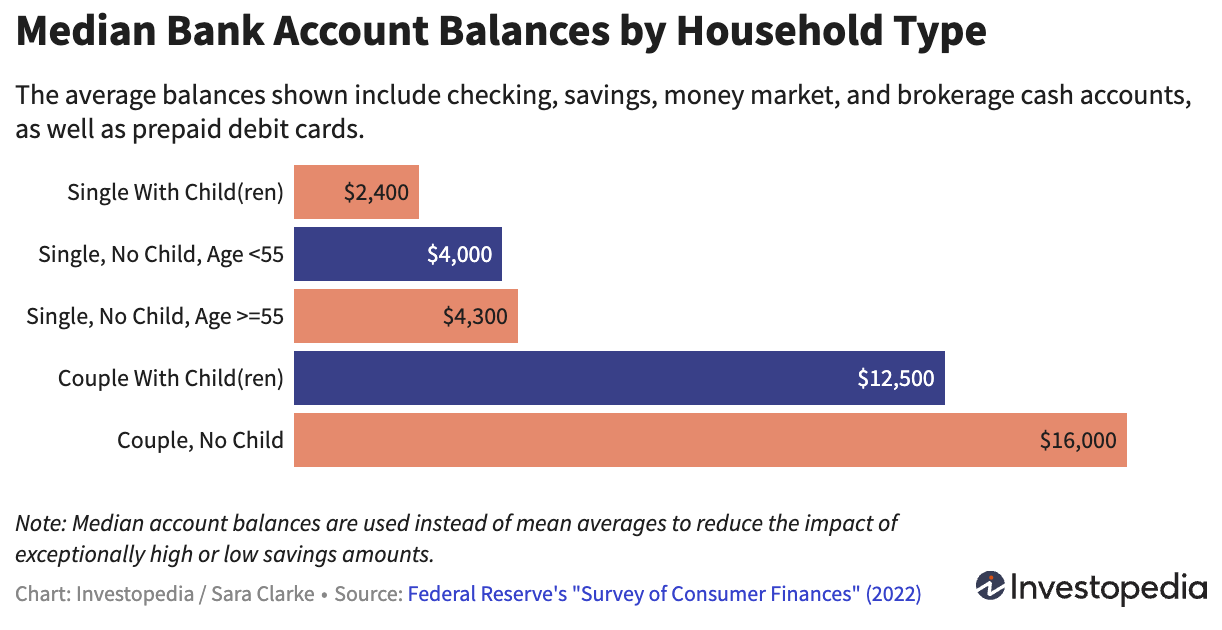
In the most recent survey (2022), more than 98% of Americans across every age group reported having money in bank accounts. But median balances varied sharply by age. For instance, those under 35 had a median of $5,400, while Americans 75 and older held a median of $10,000.
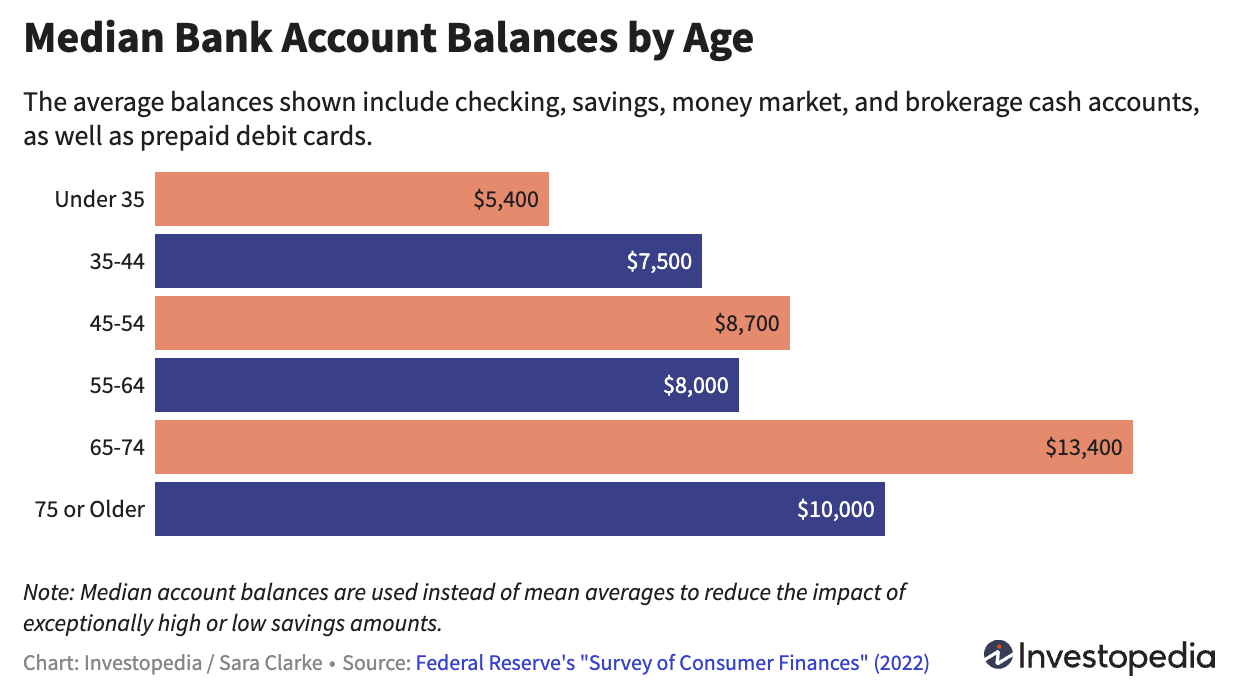
Bank account median values varied widely between singles and couples. In 2022, single adults over 55 with no children had the highest median balance among individuals ($4,300). For couples, those without children held the highest median balance ($16,000).
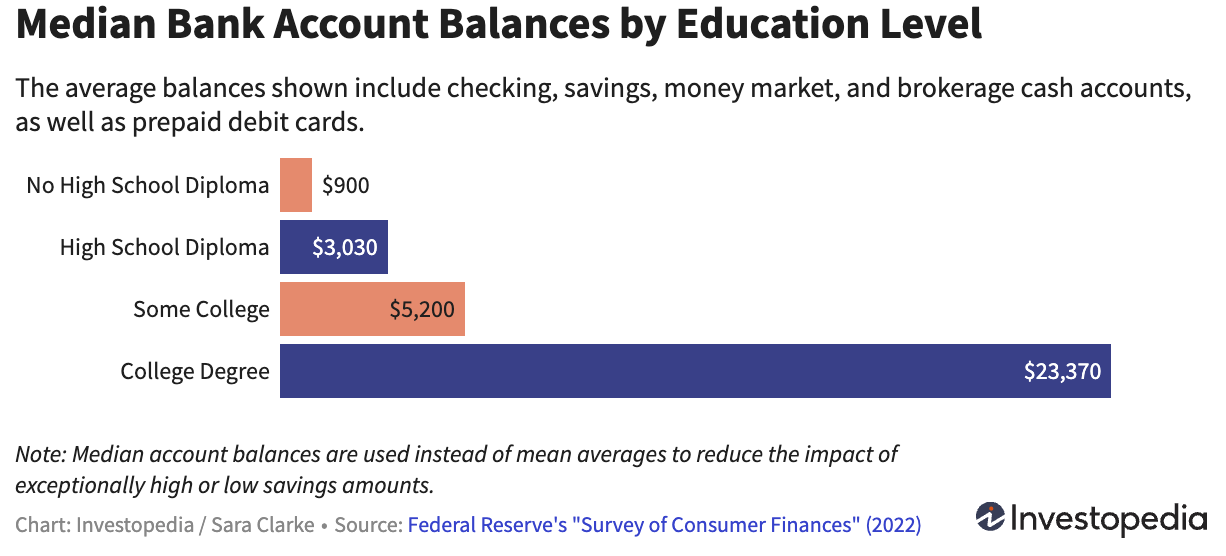
Survey results suggest a strong link between educational level and median bank balances, much more than age or family structure. High school graduates reported median savings more than three times higher than those without a diploma. College graduates had over four times the median balance of those with some college education but no degree.
You can read the full article here.
While comparing ourselves to others is not always the best course of action, using certain benchmarks can help us understand if our current financial strategies are working. If you are focusing on trying to save money, it could be helpful to see if you are on the right track.

2 min read
With easy-to-access data, convenient automatic transfers, and a variety of ways to organize your money, online banking can revolutionize the way you...

We all know we should make it a priority to save money. But as with many things in life, it can be easier said than done. It can be overwhelming to...

Putting your money into a savings account affords certain benefits. It offers a safe location for your hard-earned money, which is perfect for when...