











3 Tips For Better Sleep
The inability to sleep well can be extremely frustrating, and can add to health issues. The stress of the holiday season tends to exacerbate any...
2 min read
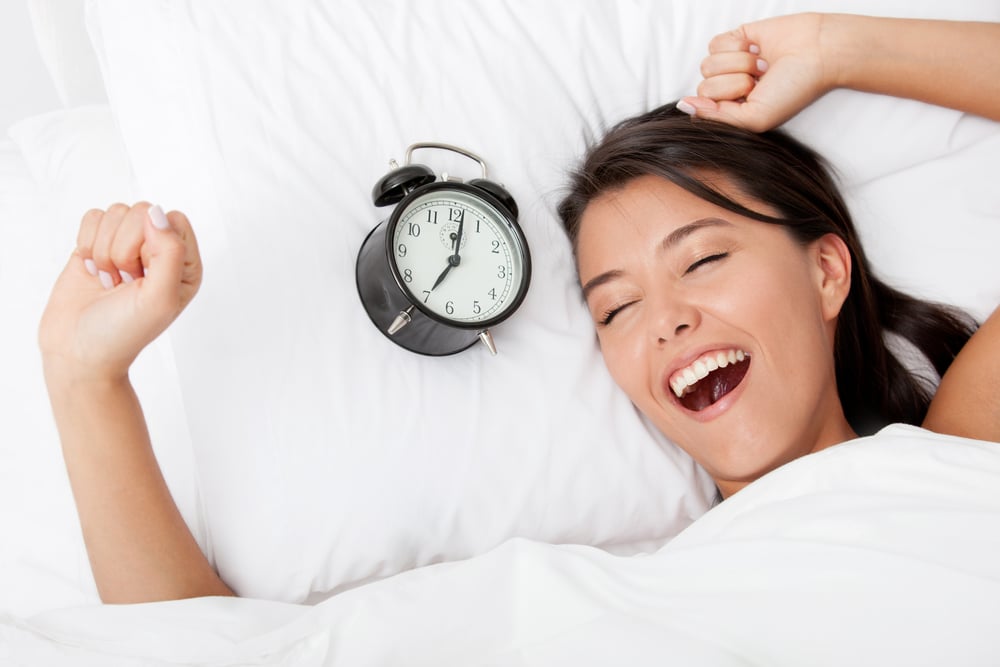
 You probably know a keeping a consistent bedtime routine can improve your sleep. But have you thought about how your daily schedule impacts sleep quality and quantity? Sleep expert Dr. Samir Fahmy offers hour-by-hour tips for spending your waking hours in a way that ensures better sleep once you turn out the lights:
First, you need to wake up at the same time every day — even, unfortunately, on weekends — to keep your 24-hour biological clock on track.
“Variability as little as one to two hours can shift melatonin onset and impair sleep efficiency,” Fahmy said.
Melatonin is a hormone the body naturally produces to regulate the sleep-wake cycle. Levels rise in the evening and tend to peak between 2 and 4 a.m., to facilitate deep, restorative sleep.
Once you’re awake, you should seek natural light within 30 to 60 minutes.
“Morning light suppresses residual melatonin and anchors circadian phase, advancing the timing of the sleep-wake cycle,” Fahmy explained. “Outdoor light (even on cloudy days) is significantly more intense than indoor lighting and has been shown to improve sleep onset latency and mood regulation.”
If you love coffee, now is the time to fill ‘er up. Caffeine keeps your alert by blocking adenosine receptors in the brain, and it can disrupt sleep if consumed too late.
“Given its half-life of approximately five to seven hours (longer in some individuals), caffeine intake should ideally cease by 12 to 2 p.m., to minimize interference with nighttime sleep,” Fahmy said.
“Earlier consumption aligns with the natural circadian rise in alertness and avoids masking the homeostatic drive for sleep later in the day.”
We know that regular exercise boosts sleep quality by increasing the duration of deep sleep, but the question of when to work out hasn’t been put to rest.
Fahmy said you should head to the gym after noon.
“Moderate-to-vigorous exercise is best performed in the late afternoon or early evening (around 4 to 7 p.m.), when body temperature and physical performance peak,” Fahmy said.
“While morning exercise is also beneficial, late-night high intensity workouts (within one to two hours of bedtime) may delay sleep onset in some individuals.”
After you’re done exercising, you should eat your final meal of the day. Research has shown time-restricted eating — limiting caloric intake to a 10–12 hour window earlier in the day — supports circadian alignment.
“Late-night eating is associated with impaired glucose metabolism and may delay melatonin secretion,” Fahmy said. “Ideally, the final meal should occur at least two to three hours before bedtime, reinforcing the body’s transition from metabolic activity to rest.”
It’s time to start getting ready for bed.
Fahmy recommends a “structured wind-down routine” that lasts 30 to 60 minutes.
“This may include dimming lights, avoiding blue-light-emittine screen, engaging in low-stimulation activities (reading, stretching or mindfulness practices) and maintaining consistent pre-sleep cues,” Fahmy said.
“Behavioral conditioning plays a central role; repeating the same sequence nightly strengthens the association between routine and sleep onset.”
Before you hit the hay, make sure your sleep environment is cool, dark and quiet. Start by setting the thermostat between 60 and 67 degrees Fahrenheit. Then it’s lights out.
Learn more by reading the full article here.
We can't schedule out every moment of every day. But there are some daily habits we can introduce to help ensure we get the best rest possible when our head hits the pillow each night. Sweet dreams!
The inability to sleep well can be extremely frustrating, and can add to health issues. The stress of the holiday season tends to exacerbate any...

Quality sleep is always important, and there are many reasons it can be disrupted. But many people who travel for business or leisure experience...
Sleep: it’s something we all do, albeit not nearly as often — or for as long — as many of us would probably prefer. Understanding our own individual...