


Don’t Let Student Loans Hold You Back from Homeownership
Did you know? According to a recent study, 72% of people with student loans think their debt will delay their ability to buy a home. Maybe you’re one...
2 min read

According to a recent survey from NewDay USA, nearly half of Veterans (49%) feel homeownership is currently out of reach.
But many may be closer than they think. And you might be, too.
If you’re a Veteran, you probably know the Veterans Affairs (VA) home loan benefit exists – it's been around for over 80 years. What you might not know is what it actually covers. Three misconceptions trip up Veterans the most (see graph below):
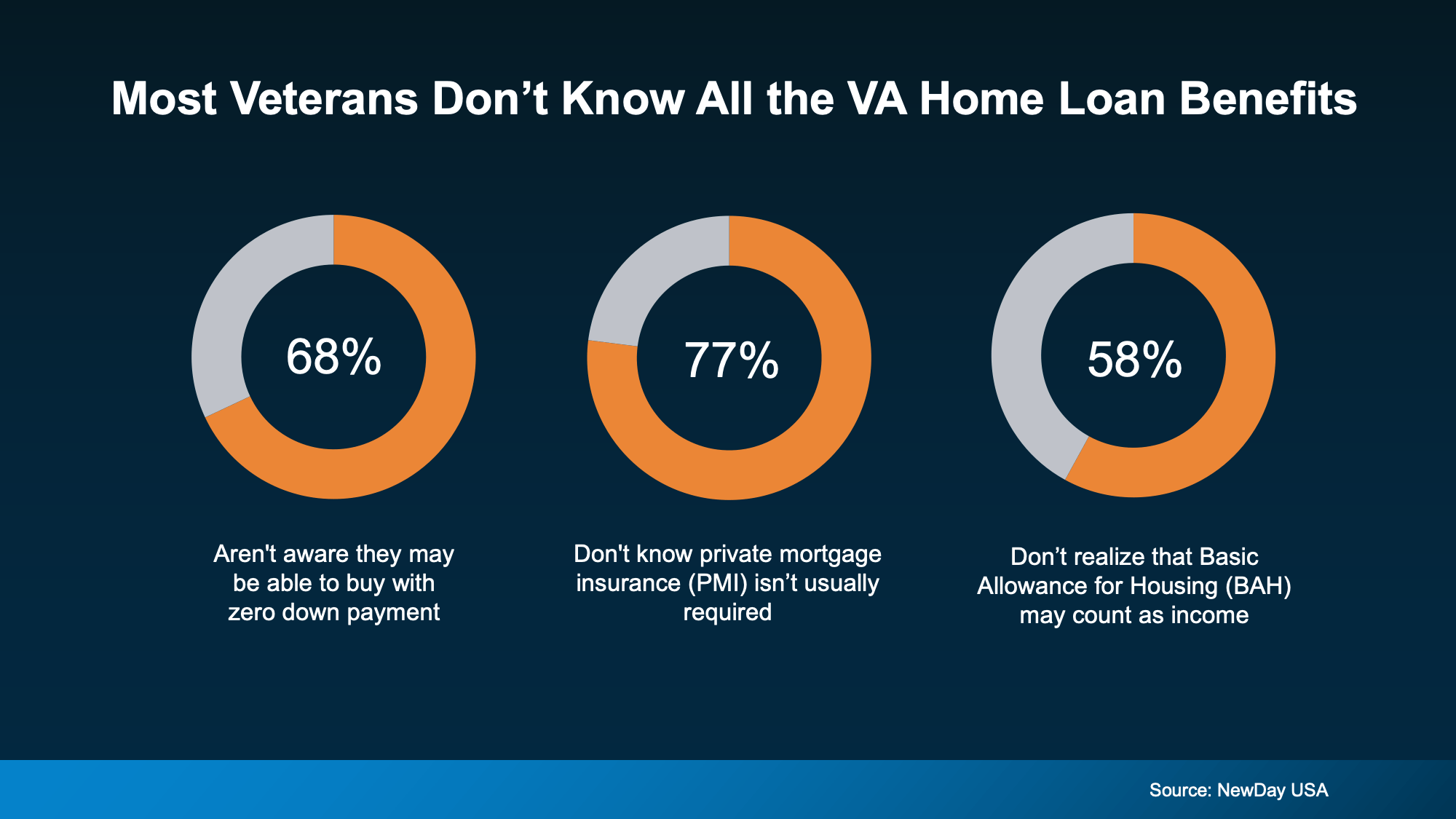
Source: NewDay USA, VA Home Loan Benefits, April 2026
Any one of those beliefs could be holding you back. Let’s walk through all three, so you have the information you really need.
The potential to put zero money down is probably the biggest perk of a VA loan, but most homebuyers don’t even realize that’s an option. According to the NewDay USA survey, many respondents guessed they’d need to save somewhere between $10,000 and $19,900 before they could buy. That’s years of saving for an upfront cost that may not be required, depending on eligibility and loan guidelines.
According to the Department of Veterans Affairs, with VA loans, there can be limits on the types of closing costs buyers have to pay. That means you may pay less out of pocket on closing day – and you may have less to save upfront, depending on your situation. The benefit combined with the down payment perk may help shorten your buying timeline.
Unlike many other loan options, VA loans typically don’t require private mortgage insurance (PMI), even with low or no money down. If you take out a conventional loan instead, you could pay $100 to $300 a month in PMI until you hit 20% equity, according to NewDay USA. Over time, this could result in long-term savings compared to loans that require PMI.
If you’re on active duty or if you’re a qualifying reservist, your Basic Allowance for Housing (BAH) and Basic Allowance for Subsistence (BAS) may count toward income qualification on a VA loan. So, if you were running the numbers without factoring your BAH or BAS in, you could qualify for more than you thought, depending on VA lender guidelines. Both BAH and BAS are non-taxable, so they may increase qualifying income.
VA home loans can put homeownership within reach, and a trusted lender can help make sure you understand the details before you move forward.
If you’re active duty, you’ve served, or know someone who has, connect with a First Federal Bank Loan Officer who can walk you through whether you’d qualify and what the VA benefit offers. You may be able to buy a home sooner than you expect, depending on eligibility and loan approval.

Did you know? According to a recent study, 72% of people with student loans think their debt will delay their ability to buy a home. Maybe you’re one...

When it comes to a mortgage and the financial stability of your home, there's no such thing as too much you can know in the case of keeping your...

Trying to decide between renting or buying a home? One key factor that could help you choose is just how much homeownership can grow your net worth.