







4 Reasons Your House Is High on Every Buyer’s Wish List This Season
When the holidays roll around, travel plans, family gatherings, and all the chaos of the season may make you think it’s better to pull your listing...
3 min read
Selling your house is a big decision, and you want to understand your options before moving forward. With some homes taking longer to sell, renting your property may seem like an alternative worth considering.
While renting can make sense for some homeowners, becoming a landlord comes with responsibilities, expenses, and risks. Before deciding which path is right for you, it’s important to consider the full picture.
Some homeowners who originally planned to sell are choosing to rent their properties instead. According to Parcl, approximately 9% of homes currently listed for rent were previously listed for sale.
Why the change? Some sellers may have expected a quicker sale or a higher price than buyers were willing to offer. When the selling process takes longer than anticipated, renting may become an alternative to consider.
As Kara Ng, Senior Economist at Zillow, explains:
“Bargaining power is tilting toward buyers and homes are taking longer to sell, making renting out a property one way to buy time rather than compete aggressively on price.”
However, the fact that some homeowners are choosing to rent doesn't mean selling is no longer a viable option. Pricing, property condition, marketing, and local market conditions can all influence how a home performs.
Parcl data also shows that the share of these “accidental landlords”—homeowners who initially planned to sell but decided to rent instead—varies significantly by location. They account for approximately 17% of rental homes in markets such as Sherman and Houston, Texas, compared with less than 4% in Des Moines, Iowa, and Bloomington, Indiana. (see graph below):
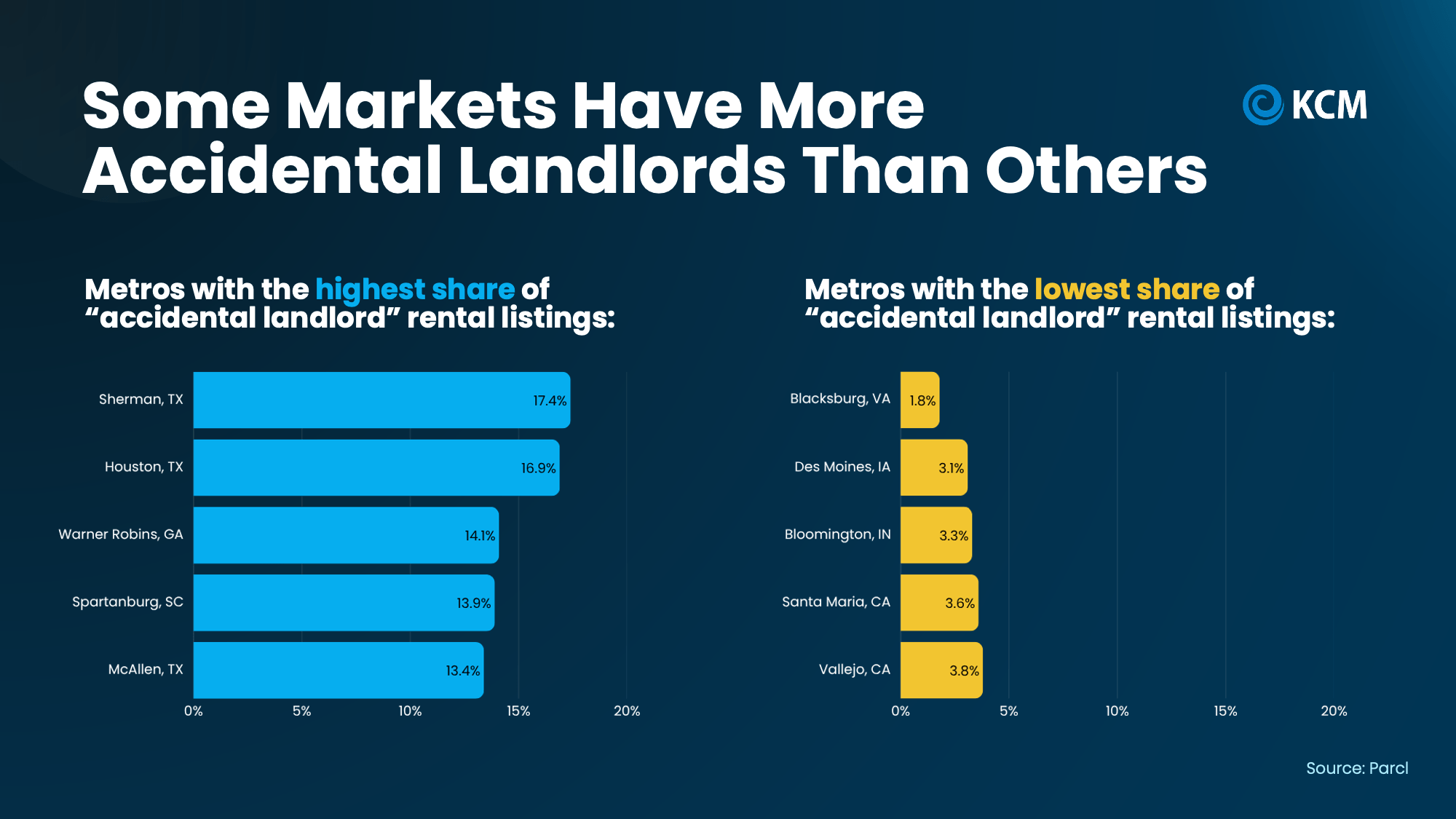
Source: Parcl HQ, Prices, Rents, Supply and Seller Motivations Across Every US Market, October 2026. Data reflects national market trends and may not represent conditions in every local market.
That's a pretty big difference. And it shows why you have to know what's happening in your neighborhood. Your market, your asking price, and your strategy all play a role in how your sale goes.
A local agent can show you how houses like yours are selling, what strategies work best, and help you weigh your options – not to push you to sell, but so you at least have the full picture based on today’s market. And part of making an informed decision is understanding what renting your house would actually take.
Renting your home may provide rental income, but it also requires time, planning, and ongoing financial responsibility. Before becoming a landlord, consider the legal obligations and day-to-day demands involved.
Depending on your location, responsibilities may include meeting property safety standards, providing required disclosures, complying with landlord-tenant laws, and maintaining the property.
You may also need to manage late rent payments, coordinate repairs, address tenant concerns, and prepare the home between tenants.
There are additional expenses to consider, including:
Before renting your home, consider estimating your potential rental income and comparing it with your expected expenses. A property that generates rental income may not necessarily produce positive cash flow.
If selling remains your preferred option, take time to discuss a strategy with your real estate agent. Today's market conditions may require a thoughtful approach to pricing, presentation, and marketing.
Consider these steps:
No particular strategy can guarantee a sale or a specific price, but understanding your local market and evaluating your options can help you make more informed decisions.
Deciding whether to sell or rent depends on your financial situation, future plans, property condition, local market, and willingness to take on the responsibilities of being a landlord.
Selling and renting each come with different considerations, and neither option is right for every homeowner.
If you're weighing your options, start by talking with a local real estate professional about the current market. You may also want to consult a financial or tax professional to understand the potential costs and implications of each choice.
When the holidays roll around, travel plans, family gatherings, and all the chaos of the season may make you think it’s better to pull your listing...

If buying or selling a home is your goal for 2024, it’s important to understand today’s housing market, know your why, and work with a First Federal...
Looking ahead to 2025, it's important to know what experts are projecting for the housing market. And whether you're thinking of buying or selling a...