That kitchen you’ve been mentally redesigning...
The bathroom that really needs a refresh...
Or the outdoor space you keep saying you’ll get to someday...
What if you could have what you need to finally make it happen? Because a growing number of homeowners are realizing just that.
According to JCHS, Harvard University, homeowners are projected to spend over $522 billion on home improvements by the end of 2026 – and they’re not draining their savings accounts to get it done. Many are using their home equity.
And if you’ve owned your home for 10+ years, there’s a chance your home equity may be one option to consider when funding home upgrades. Let’s break down what you need to know first.
Equity is the difference between what your house is worth and what you owe on your mortgage.
And according to Cotality, the average homeowner has about $313,000 worth of equity today. That’s more than enough to finally knock some projects off your list. And more people are realizing they can use that to give their home a little TLC.
Research coming out of Meridian Link says home improvements are the top thing people are using their equity for today.
Maybe it makes sense for you to do the same. But here’s what’s important. Just because you can use your equity doesn’t mean you have to. It also doesn’t mean every project makes sense (using home equity involves risks, including the possibility of foreclosure if loan obligations are not met).
If you’re going to go this route, you’ll want to focus on upgrades that actually pay off. A good renovation should be something that improves the value of your home. Because, even if you’re not planning to sell soon, you want to make sure you’re setting yourself up for success when you do.
And an agent is the best resource as you weigh your options. They know what other homeowners are doing and what buyers in your area like. And that can be really helpful as you narrow down your project list. As the National Association of Realtors (NAR) puts it:
“Being able to help sellers prioritize home improvements and maximize their net on the sale is a key value real estate agents offer.”
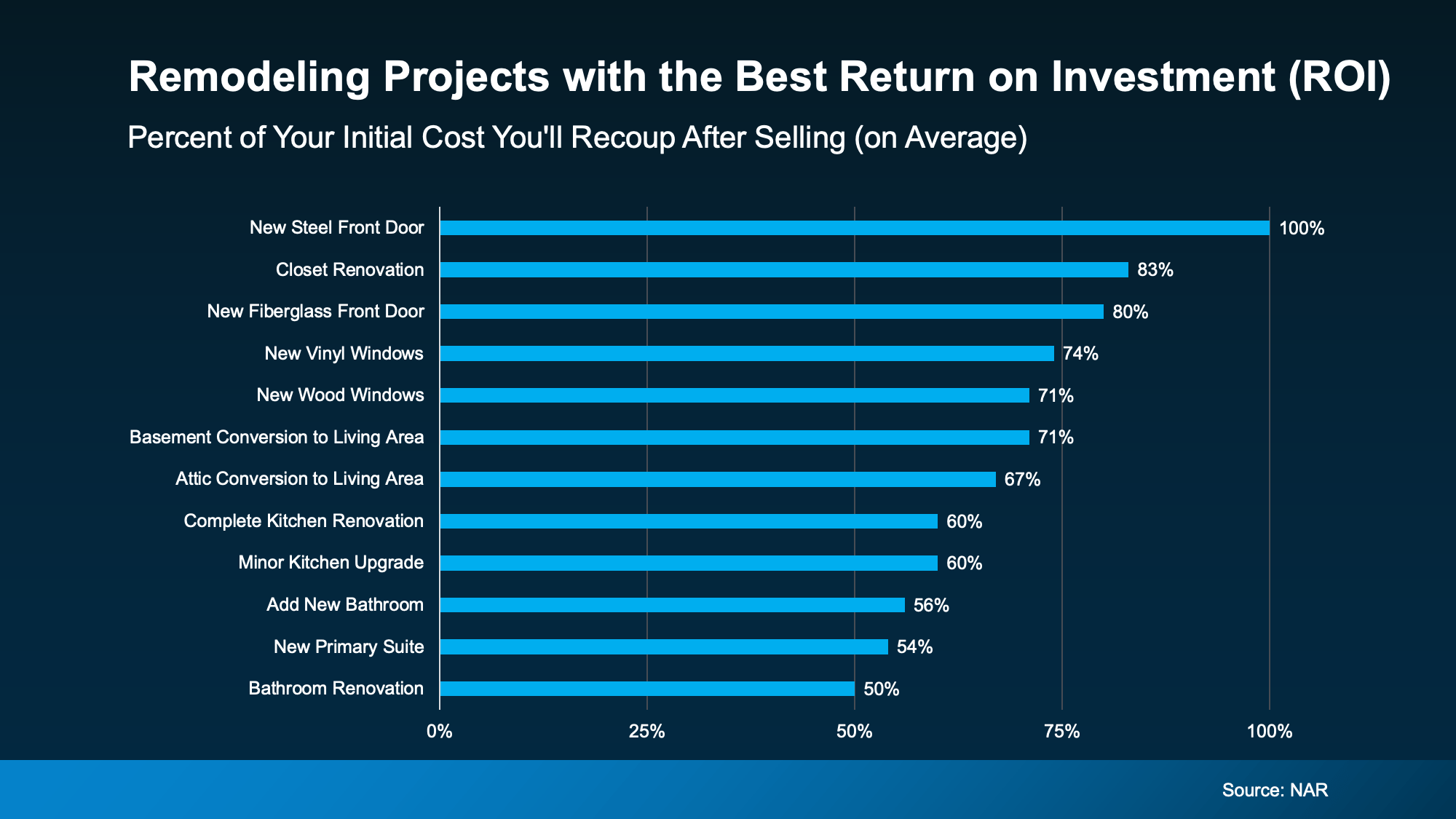
Here’s a quick rundown of the projects with the best potential to recoup your costs according to NAR (see graph below). While it’s a good starting point, just remember it can’t match the expertise an agent can provide.
Source: NAR, 12 Remodeling Projects That Offer the Best Value at Resale, March 2026 (Estimated returns are averages and may vary based on market conditions, property characteristics, and location.)
As you can see, there’s a wide range of projects on that list. Yes, some are bigger-ticket items, like kitchens or baths. But others are smaller updates with surprisingly strong ROI.
A new front door is a great project. But it’s not something to use your equity for. But revamping your kitchen? That’s where home equity may help, depending on your financial situation.
Where To Go from Here
Whether the project you’ve been thinking about is on this list or not, consider speaking with a real estate or financial professional to evaluate the time, cost, and potential value before calling in any contractors.
Because the goal isn’t to do everything, it’s to invest where it counts.
And if you want to use your equity to get one of the bigger projects done, meet with a financial advisor too. Because you’ll want to make sure you’ll maintain a good loan-to-value (LTV) threshold even after using your equity. That way you have all the information you need to make your decision.
Bottom Line
Whether you’re selling next year or just giving your house some TLC, the right home improvements today could set you up for success tomorrow. And the best part? Home equity may be one option to consider when planning your home improvement goals.
What’s one upgrade you’ve been thinking about – and wondering if it’s worth it?
Have a quick conversation with a First Federal Bank Loan Officer about whether it’s the right decision for your home.